
The most common mistakes with antioxidant supplements are expecting too much, assuming more is better, and buying without checking what is actually in the bottle. Antioxidants are nutrients and plant compounds involved in normal cell function and protection against oxidative stress. They are not a shortcut to recovery, and they do not replace a varied diet. Getting the category right starts with understanding what these products are for, where the evidence is solid, and where it is thin. The rest of this article walks through the specific missteps that lead to wasted money and unrealistic expectations.
What antioxidant supplements actually are
"Antioxidant" is a broad umbrella, not a single product type. The category includes vitamin C and vitamin E, minerals such as selenium and zinc, and compounds the body makes itself, like coenzyme Q10 and alpha-lipoic acid. It also covers plant-derived carotenoids such as lycopene. Each of these works differently, and the NIH Office of Dietary Supplements is clear that antioxidant nutrients are involved in normal cell protection rather than in producing a specific performance outcome.
That matters for shopping. A product labeled as an antioxidant might be a single isolated nutrient or a broad blend of several. Both approaches exist for good reasons, and neither is automatically superior. What distinguishes them is transparency about what is inside.
Mistake 1: assuming a higher number on the label is better
The instinct to buy the strongest version of anything is common, and it is usually wrong here. Antioxidant nutrients are not like training volume, where more work generally builds more capacity. Many have a level of intake the body can use efficiently, and beyond that the excess is simply handled and removed. Higher strengths are not a quality signal in themselves.
This also applies to blends. A capsule that lists a dozen ingredients may list them in amounts too small to matter, or it may be a well-designed combination. The only way to know is the Supplement Facts panel, which shows what is actually in the product. If the numbers on the panel are not visible before purchase, that is a reason to keep looking.
Mistake 2: stacking several products that overlap
Bundling an antioxidant capsule with a multivitamin, a greens powder, and a separate single-nutrient product can quietly duplicate the same ingredients several times over. Most people do not read the panels side by side and do not notice the overlap. The result is a shelf full of products that all do similar things.
A more sensible approach is to pick one or two categories that genuinely fit your diet and goals, and then check the labels of everything you are already buying for repetition. If you are working with a clinician or a registered dietitian on this, bring the actual panels rather than the product names.
Mistake 3: expecting performance or recovery results
This is where the gap between marketing and evidence is widest. The antioxidant category is regularly sold with recovery language, but the research on hard training is genuinely mixed. Some studies suggest antioxidant nutrients support normal immune and cellular function; others suggest that large amounts of isolated antioxidants around training may interfere with the adaptive signaling exercise is supposed to produce. That second point is not settled, but it is a good reason to approach high-strength antioxidant products as nutrition support rather than as a performance tool.
The Academy of Nutrition and Dietetics position is that food first remains the foundation, and that supplements fill gaps rather than creating an edge. If your diet is already rich in fruit, vegetables, and varied fat sources, an antioxidant product is unlikely to change much.
Mistake 4: ignoring which form of a nutrient you are buying
Many antioxidant nutrients exist in more than one chemical form, and the forms are not interchangeable. Vitamin E is a good example: natural-source and synthetic forms differ, and labels distinguish them. Coenzyme Q10 is another, where different delivery formats affect how the product is presented. Carotenoid products vary too, with some built around a single compound such as lycopene.
For a shopper, the practical takeaway is not to memorize chemistry. It is to read the ingredients line by line and notice whether the product explains what form it uses and why. A brand that is specific about its ingredients is usually a brand that is being careful. If you are comparing products and cannot tell what form you are getting, that is information in itself.
Mistake 5: buying blends without checking the panel
Broad-spectrum antioxidant products can be genuinely useful for people who want a simple, single-product approach. But the blend category also attracts the least transparent labeling. Watch for products that list proprietary blends without amounts, that bury familiar ingredients deep in a long list, or that lean on the word "antioxidant" without telling you what the formula is built around.
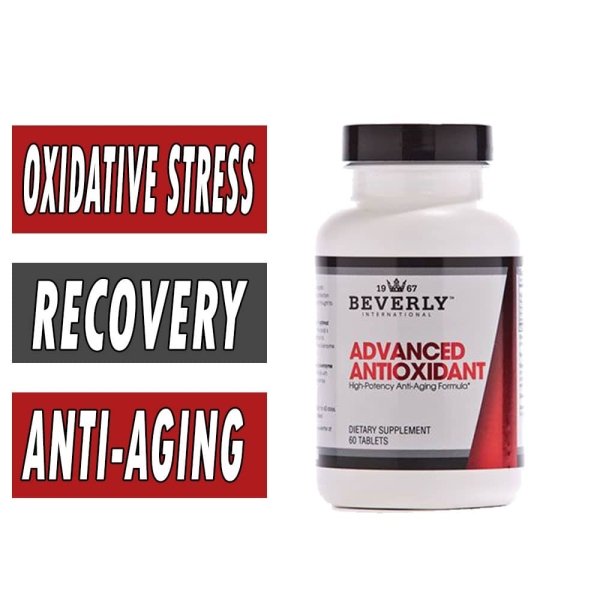
Some blends are straightforward. Beverly International - Advanced Antioxidant Compound - 60 Tablets is a multi-ingredient antioxidant formula from a long-established sports nutrition brand, and it sits in the category as a broad rather than single-nutrient option. Whether that fits you depends on whether you want coverage or a targeted single ingredient. That decision belongs on the panel, not on the front label.
Mistake 6: overlooking single-ingredient options
The opposite error is assuming blends are always the smarter buy. Single-ingredient products are easier to evaluate, easier to combine with the rest of your intake without duplication, and easier to stop if you decide the category is not for you. They are the more honest way to try a nutrient.
A few examples from the range show how varied this category is:
- MRM CoQ10 with L-Carnitine Liquid - Orange-Vanilla Flavored - 16 fl oz is a liquid-format product built around coenzyme Q10 paired with L-carnitine. The liquid format matters for anyone who struggles with capsules.
- Allmax R-ALA - 150 mg - 60 Capsules is a single-ingredient alpha-lipoic acid product. Alpha-lipoic acid is a compound involved in energy metabolism, and it is one of the more heavily marketed antioxidant ingredients.
- 21st Century Lycopene - 25 mg - 60 Tablets is a single-carotenoid product. Lycopene is the carotenoid associated with tomato-based foods.
Each of these does one thing in a defined way. None of them is a substitute for the others, and there is no ranking among them. They are different categories, and the choice should follow what you actually want.
Antioxidant product types compared
| Product type | What it is | What to weigh |
|---|---|---|
| Broad blend | Several antioxidant nutrients in one formula | Is the panel fully disclosed, and does it duplicate what you already take? |
| Single nutrient | One compound, such as alpha-lipoic acid or lycopene | Easier to evaluate; check the form and whether it suits your diet |
| Liquid format | Coenzyme Q10 or similar in a drinkable base | Convenience and ingredient pairing; check the full label |
| Carotenoid products | Lycopene or related plant compounds | Whether food sources already cover this for you |
Mistake 7: assuming antioxidant products are risk-free
Supplements are not automatically benign because they are sold without a prescription. Very high intakes of certain isolated nutrients carry known interactions and tolerability issues, and some ingredients can interact with medications. The FDA regulates dietary supplements as a food category rather than as drugs, which means quality depends much more on the manufacturer than many shoppers assume.
Anyone who is managing a health condition, taking prescription medication, is pregnant or breastfeeding, or is under 18 should speak with a qualified healthcare professional before adding any supplement. This category is intended for healthy adults, and even then the label and a clinician are the right starting points.
Mistake 8: neglecting the food underneath
No antioxidant product compensates for a diet low in produce. Food provides fiber, a wide spread of phytonutrients, and a matrix of compounds that isolated products do not replicate. The International Society of Sports Nutrition has consistently emphasized that supplements complement a sound diet rather than replace it, and that is the correct frame for this whole category.
Practically, that means the question is never "which antioxidant is best" in isolation. It is "which gaps in my diet are real, and is a product a sensible way to fill them" - which is a much harder question and a much better one.
What to check before you buy
- Third-party testing. Look for a manufacturer that documents testing for identity, purity, and contaminants. The NIH Office of Dietary Supplements notes that independent verification is one of the most useful signals a shopper has.
- The Supplement Facts panel. Confirm every ingredient and its amount are listed. A proprietary blend with no amounts is a reason to pause.
- Banned-substance certification. If you compete, check for a certification program recognized by your governing body. USADA publishes guidance on what to look for.
- Overlap with what you already take. Line up the panels of everything on your shelf before adding another product.
- A conversation with a clinician. Especially if you take medication or have any health condition.
If you are still working out which categories fit, the Daily Wellness collection groups these products together so you can compare panels side by side.
Frequently asked questions
Do antioxidant supplements help with recovery after training?
The evidence is mixed. Some research suggests antioxidant nutrients support normal cellular and immune function, but studies on hard training have not shown consistent recovery benefits, and some work suggests large isolated intakes may blunt adaptive signaling. It is a nutrition-support category, not a proven recovery tool.
Is it better to choose a blend or a single-ingredient product?
Neither is inherently better. A blend can be convenient if the panel is fully disclosed, while a single-ingredient product is easier to evaluate and to avoid duplicating with the rest of your intake. The deciding factor is the Supplement Facts panel, not the front of the bottle.
Can I take an antioxidant product alongside a multivitamin?
Possibly, but overlap is the concern. Many multivitamins already include vitamin C, vitamin E, selenium, and zinc, so adding a separate antioxidant formula may repeat ingredients. Compare the panels first, and check with a clinician if you are unsure.
Are natural forms of these nutrients worth paying more for?
Forms are not interchangeable, and labels distinguish them. Whether the difference matters for you depends on the specific nutrient and your diet. A brand that is specific about its forms is generally more transparent, which is a reasonable thing to pay for.
Do I need antioxidant products if I eat plenty of fruit and vegetables?
Probably not as a priority. The Academy of Nutrition and Dietetics emphasizes food first. A varied diet already supplies a broad spread of these compounds, and supplements are best used for genuine gaps rather than layered on top of an already strong intake.
Who should talk to a professional before buying?
Anyone who takes prescription medication, is managing a health condition, is pregnant or breastfeeding, or is under 18. Even healthy adults benefit from a quick conversation with a clinician or registered dietitian before adding a new product to their routine.
Products mentioned in this guide
- Beverly International - Advanced Antioxidant Compound - 60 Tablets — from $17.28
- MRM CoQ10 with L-Carnitine Liquid - Orange-Vanilla Flavored - 16 fl oz — from $33.59
- Allmax R-ALA - 150 mg - 60 Capsules — from $16.79
- 21st Century Lycopene - 25 mg - 60 Tablets — from $16.79
Keep exploring
- Browse Multivitamins
- Not sure where to start? Try the quick questionnaire.
These statements have not been evaluated by the Food and Drug Administration. This product is not intended to diagnose, treat, cure, or prevent any disease. Consult a qualified healthcare professional before starting any supplement, especially if you are pregnant, nursing, taking medication, or managing a medical condition.